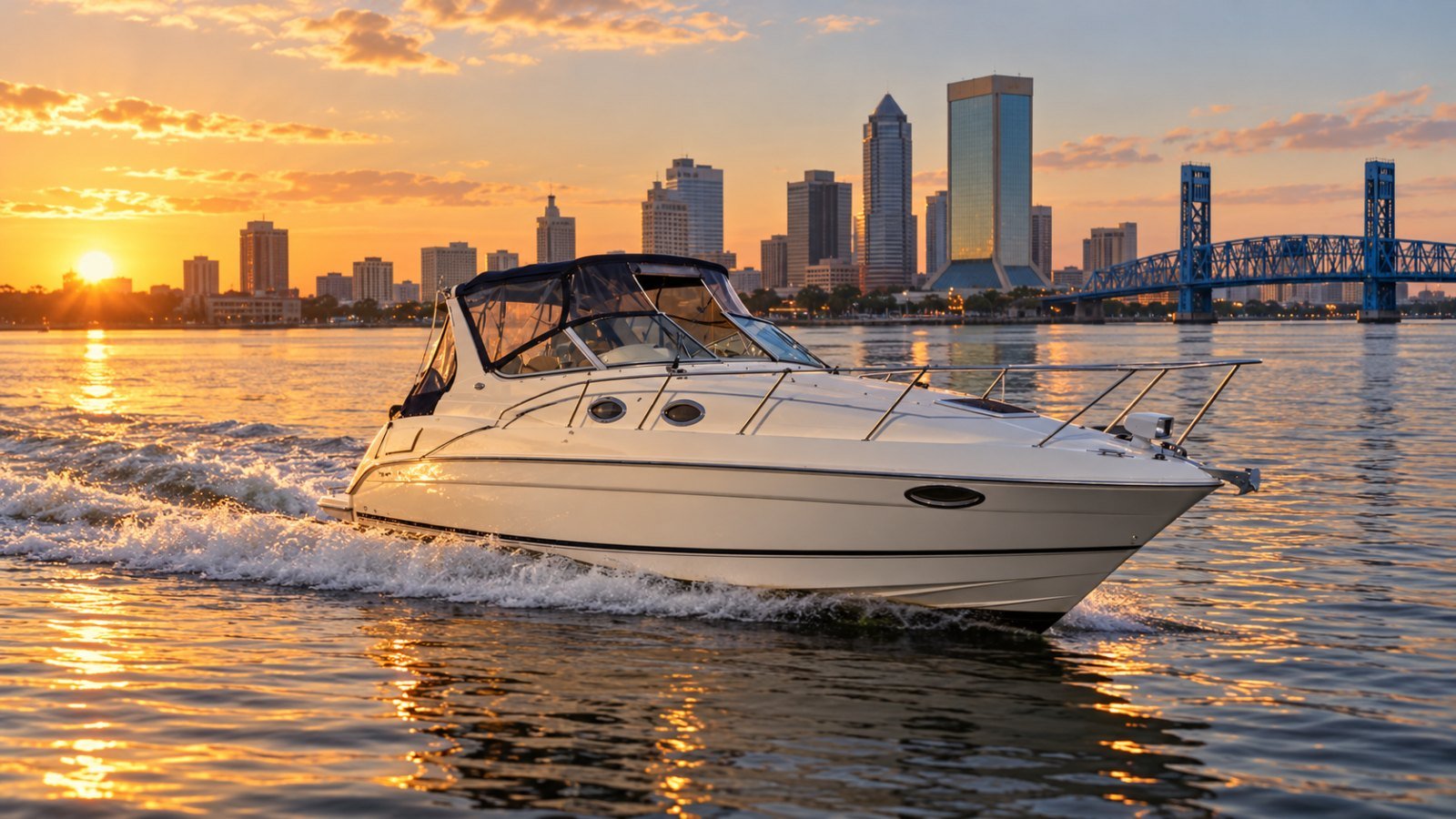
Choosing a Jacksonville boat charter is mostly a question of timing. The boats, the captains and the water stay the same all year. What changes is the air temperature, the water temperature, the wind, the fish, the wildlife and how quickly a Saturday slot disappears.
So this guide walks through the whole calendar with real Northeast Florida numbers instead of vague advice about summer being nice. You will find monthly water temperatures, sunset times, fishing seasons, wildlife windows and honest notes on crowds and value. Because every trip we run departs from one of five very different launch points, we have also flagged which one suits which season.
The quick answer
- Best all-round months: April, May, October and early November. Warm water, light wind, thinner crowds.
- Best for swimming and sandbars: June through September, when the ocean sits in the low 80s.
- Best value: late September through November, and again in February.
- Best for sailing at Fernandina: March through May, when the sea breeze is steady but not fierce.
- Best for inshore fishing: the fall redfish run, roughly late September to November.
- Quietest water overall: December through February, though you will want a jacket.
What this guide covers
The short answer: when is the best time for a Jacksonville boat charter?
If you want one window, take mid-April through May or late September through early November. Both stretches give you water in the 70s, long daylight, a manageable sea breeze and far fewer boats on the river. Prices around town also soften either side of the summer peak.
That said, the honest answer depends on what you actually want from the day. A family that wants to swim off a sandbar should come in July. An angler chasing redfish should come in October. A couple who wants a quiet sail at sunset will have a better time in April than in August. So the rest of this guide splits the year by purpose rather than pretending one month wins outright.
One thing stays constant. Every Jacksonville boat charter we run includes a USCG-licensed local captain, so you never need a boating license or any prior experience. In other words, the weather is the only real variable you have to plan around.
Four things that actually change month to month
Most seasonal guides talk about vibes. In practice, only four variables change the quality of a day on the water in Northeast Florida.
1. Air temperature
Jacksonville is warm but not tropical. Winter highs sit in the mid to upper 60s, while July and August highs push into the low 90s. Crucially, it feels cooler under way, because a moving boat generates its own breeze.
2. Water temperature
This matters more than air temperature if anyone plans to swim. The ocean off Jacksonville Beach averages about 59°F in February and roughly 83°F in August. As a rule, swimming becomes comfortable from mid-May and stays comfortable into late October.
3. Wind, rain and storms
Summer brings a near-daily sea breeze thunderstorm cycle that usually builds in the afternoon and evening. Mornings, by contrast, are typically calm and clear. Spring and fall have the steadiest all-day conditions of the year.
4. Crowds and price
Peak visitor season runs from June through Labor Day, so weekend slots fill first and fill early. After Labor Day the beaches empty out quickly, and the same trip suddenly feels private.
| Month | Avg high | Avg low | Rain (in) | Ocean temp |
|---|---|---|---|---|
| January | 66°F | 42°F | 3.3 | 59°F |
| February | 69°F | 46°F | 2.9 | 59°F |
| March | 74°F | 50°F | 3.3 | 61°F |
| April | 80°F | 56°F | 2.9 | 68°F |
| May | 86°F | 63°F | 3.4 | 74°F |
| June | 90°F | 70°F | 7.6 | 79°F |
| July | 92°F | 73°F | 6.8 | 82°F |
| August | 91°F | 73°F | 6.9 | 83°F |
| September | 87°F | 70°F | 7.6 | 82°F |
| October | 81°F | 61°F | 4.0 | 78°F |
| November | 73°F | 51°F | 2.0 | 71°F |
| December | 68°F | 45°F | 2.8 | 63°F |
Air temperatures are NOAA 1991–2020 normals for Jacksonville International Airport. Riverfront and beach lows typically run several degrees warmer.
Spring (March to May): the sweet spot for a Jacksonville boat charter
Spring is the season locals quietly protect, and it is when a Jacksonville boat charter shows off. Highs climb from the mid-70s in March to the mid-80s by May, and the humidity has not arrived yet. Meanwhile the afternoon storm machine stays switched off, so a three-hour trip rarely gets interrupted.
Water temperature is the one catch. The ocean still reads around 61°F in March, so March and early April suit cruising, wildlife watching and fishing far better than swimming. By mid-May the ocean reaches roughly 74°F and the sandbar season begins in earnest.
Sailing and long cruises
Steady sea breezes make the Fernandina Beach sailboats and catamarans a joy in April and May.
Spring kingfish and cobia
Nearshore action picks up sharply, and inshore redfish and trout stay reliable throughout.
Event weekends
Opening of the Beaches in late April and the Jacksonville Jazz Festival over Memorial Day weekend both book out fast.
If you are planning a proposal, an anniversary or a small wedding party, spring is the safest bet of the year. Above all, book early, because March through May is also when Jacksonville hosts several of its biggest events.
Summer (June to August): peak season, so start early
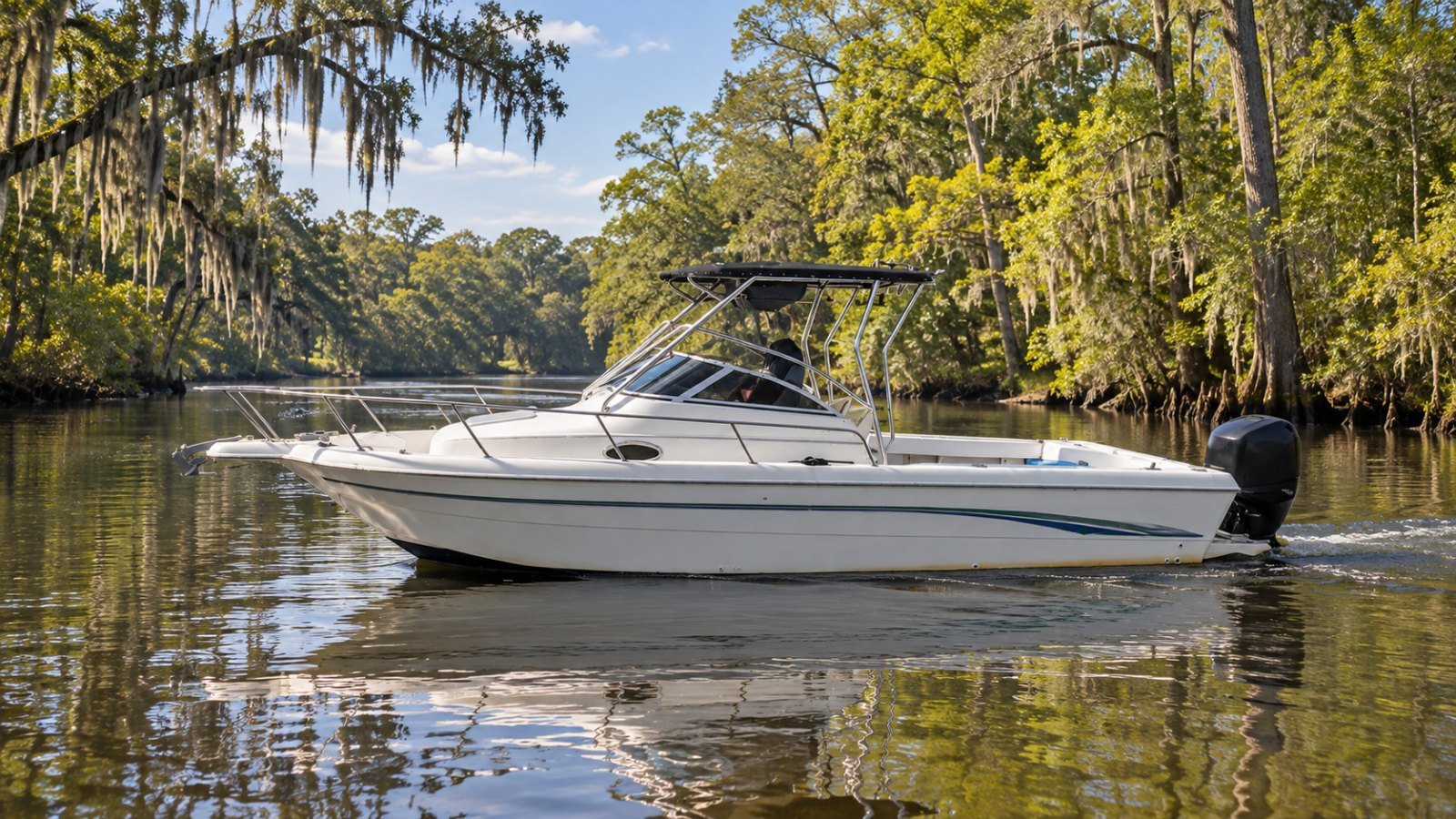
Summer is the busiest stretch for every Jacksonville boat charter operator, and for good reason. The ocean reaches 79°F to 83°F, daylight runs until roughly 8:30 p.m. in late June, and every sandbar and creek is swimmable. Families dominate the calendar from the moment school lets out.
The trade-off is heat and weather. Northeast Florida runs a wet season from roughly May into late September, and June, August and September each average close to seven inches of rain. Almost all of it falls as short, punchy afternoon and evening storms rather than all-day drizzle.
Local tip: book a morning departure in summer. A 9 a.m. or 10 a.m. start gives you flat water, softer sun and a far smaller chance of a storm cutting the afternoon short. Evening sunset runs are the other reliable window, since the sea breeze usually settles by then.
Summer is also the season for tarpon, which arrive in June and stay through August, and for the Greater Jacksonville Kingfish Tournament in July. Fourth of July fireworks over the St. Johns are best seen from the water, so those slots go first.
Fall (September to November): the locals’ favorite season
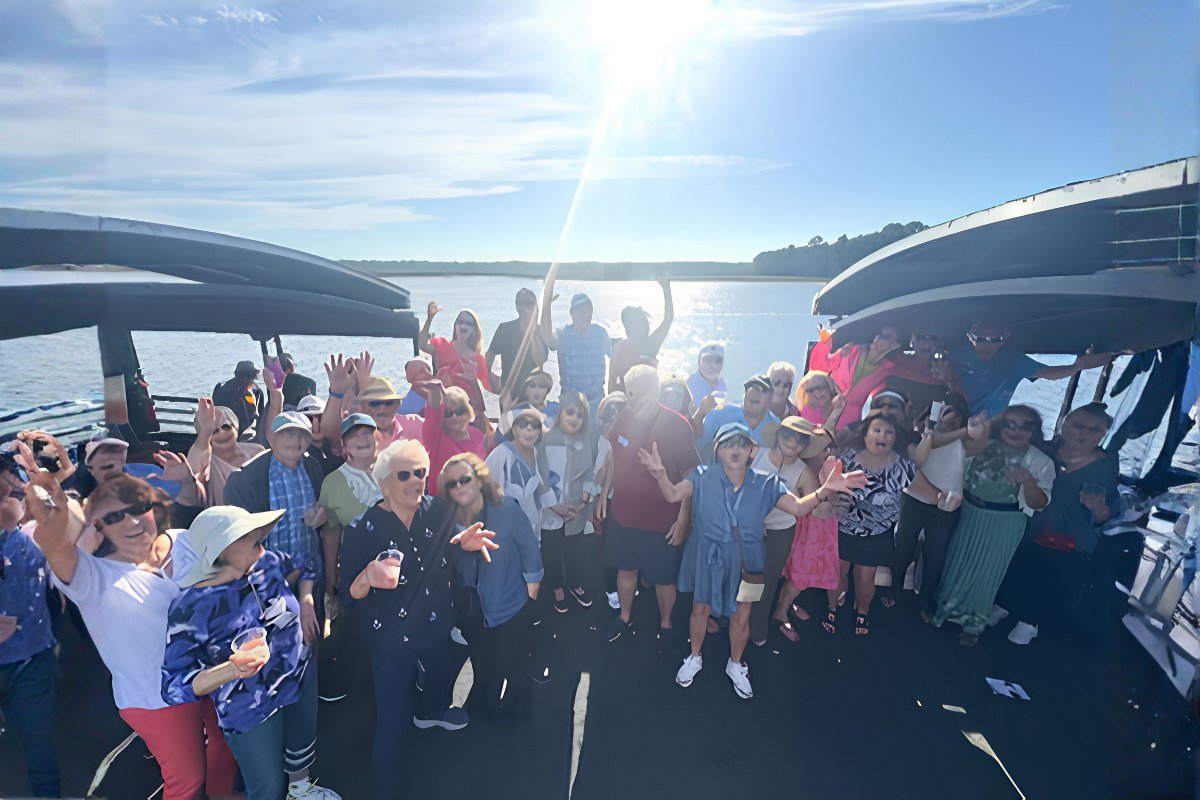
Ask a captain when they would book their own Jacksonville boat charter, and most will say October. Crowds thin out immediately after Labor Day, yet the ocean holds around 78°F right through October. November then delivers the driest month of the year, averaging just two inches of rain.
Fall is also when inshore fishing peaks. Redfish school up, flounder move through in October, and speckled trout stay steady. As a result, a fall fishing charter often out-produces the same trip in July.
Late September onward
Summer crowds disappear while summer water temperatures linger for weeks.
Manatee transit
Manatees move through the Intracoastal and St. Johns in September and October before heading south.
Hurricane season
The Atlantic season runs through November 30, with a statistical peak on September 10.
Hurricane risk deserves a sentence of realism rather than alarm. Over a 154-year record, Jacksonville is brushed or hit by a tropical system roughly once every two years, and takes a direct hurricane hit around once a decade. Still, we watch forecasts closely in September and October, and weather cancellations are always refunded or rescheduled.
Winter (December to February): the quietest Jacksonville boat charter season
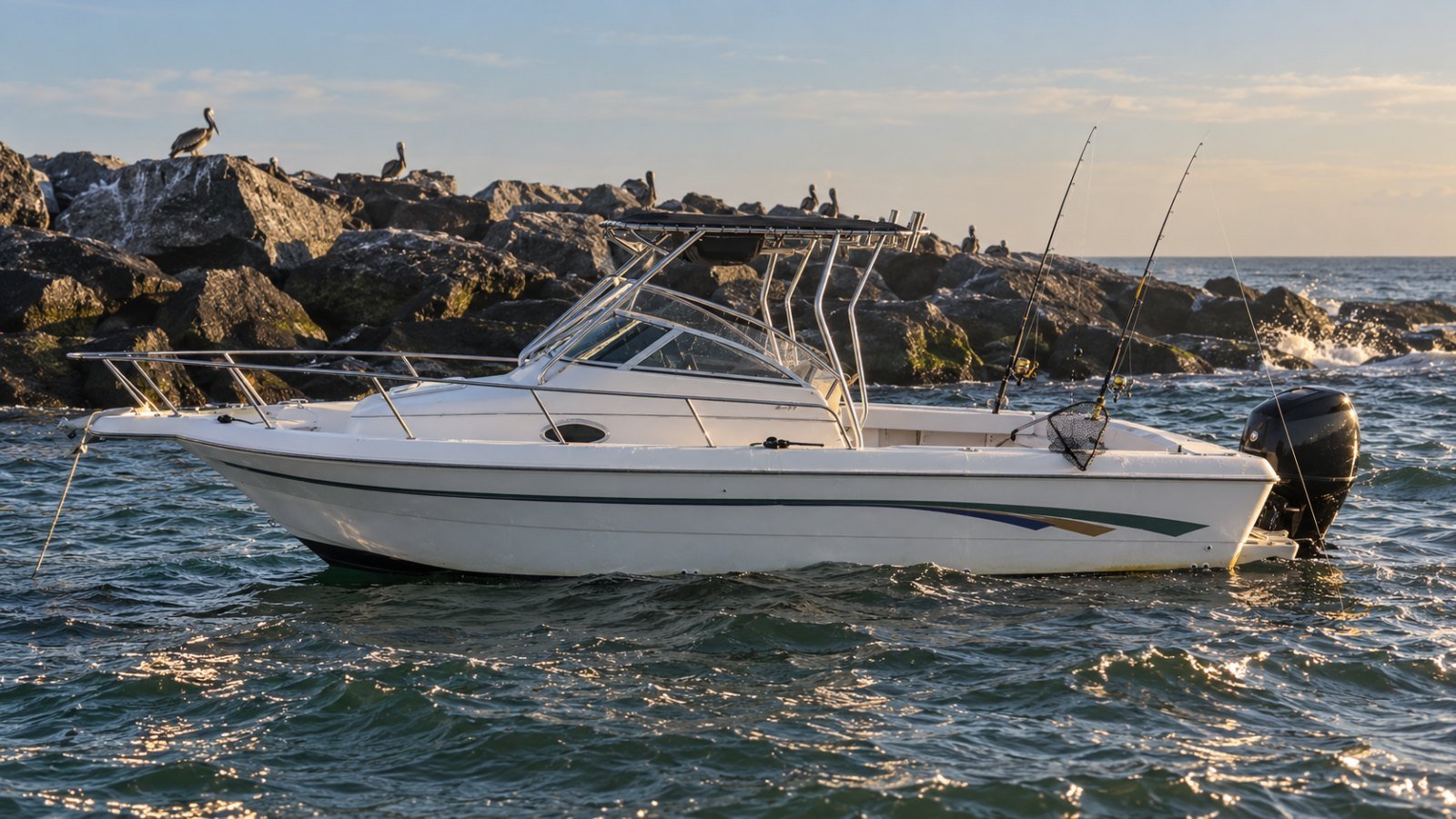
Winter never truly shuts the water down here. Highs sit in the mid-60s, freezing weather is rare, and the river is often glassy. Because almost nobody else is out, a winter Jacksonville boat charter feels genuinely private.
Swimming is off the table, since the ocean drops to roughly 59°F in January and February. Instead, winter is for scenery, photography, dolphin watching and sheepshead fishing, which peaks in exactly these months. Dress in layers and bring a windproof jacket, then enjoy having the St. Johns to yourself.
Two winter highlights are worth planning around. The Jacksonville Light Boat Parade lights up the river around Thanksgiving weekend, and New Year’s Eve brings fireworks downtown. Both look far better from a boat than from a seawall.
Month-by-month Jacksonville boat charter planner
Use this Jacksonville boat charter planner as a shortcut. It pairs each month with the water temperature, what is happening biologically, and the trip we would steer you toward.
| Month | Ocean temp | On the water | Crowds & value | What to book |
|---|---|---|---|---|
| January | 59°F | Sheepshead peak; dolphins year-round; right whale calving season offshore | Lowest of the year | Downtown river cruise or a short powerboat run |
| February | 59°F | Sheepshead and black drum; snook season reopens February 1 | Very quiet, strong value | Inshore fishing or a sightseeing cruise |
| March | 61°F | Redfish and trout wake up; manatees begin returning | Spring break spikes mid-month | Fernandina sailing or a creek cruise |
| April | 68°F | Spring kingfish run; cobia nearshore; glorious light | Busy weekends, quiet weekdays | Sailing catamaran or a nearshore fishing trip |
| May | 74°F | Swimming season opens; sea turtle nesting begins May 1 | Rising, still pre-peak pricing | Sandbar day on the 25-foot powerboat |
| June | 79°F | Tarpon arrive; manatees most abundant; storms build | Peak season begins | Morning charter or a sunset cruise |
| July | 82°F | Kingfish tournament; Fourth of July fireworks over the river | Busiest month | Tiki hut party boat or the 44-foot Sea Ray |
| August | 83°F | Warmest water of the year; daily afternoon storms | Peak until school returns | Early-morning swim and sandbar trip |
| September | 82°F | Fall redfish run starts; manatees transit south | Empties out after Labor Day | Inshore fishing charter |
| October | 78°F | Flounder run; best all-round month for weather and value | Quiet and excellent value | Anything; this is the month to splurge |
| November | 71°F | Driest month; right whale season opens; light boat parade | Very quiet | Downtown cruise or a fishing trip |
| December | 63°F | Sheepshead return; holiday lights along the river | Quiet outside holidays | Light parade cruise or a private charter gift |
Best time to book by what you actually want to do
Sunset cruises: timing is everything
Sunset timing swings by three hours across the year, which changes the whole shape of the evening. In December the sun drops around 5:28 p.m., so a sunset cruise works beautifully as an after-work outing. In late June it holds off until roughly 8:30 p.m., which makes it a proper post-dinner event.
- January5:48 p.m.
- February6:15 p.m.
- March7:35 p.m.
- April7:54 p.m.
- May8:14 p.m.
- June8:30 p.m.
- July8:30 p.m.
- August8:08 p.m.
- September7:32 p.m.
- October6:56 p.m.
- November5:30 p.m.
- December5:28 p.m.
For the best color, aim to be on the water about 45 minutes before sunset. Our Jacksonville sunset cruise guide goes deeper on routes and viewpoints.
Fishing charters
Northeast Florida fishes well every month, but the target changes. Sheepshead and black drum carry the winter. Spring brings the kingfish run and cobia nearshore. Tarpon show up in June, and then the fall redfish run takes over from September into November.
Regulations shift too, so your captain handles the details. For example, snook in the Atlantic Northeast region is open February 1 to June 14 and again from September 1 to December 14, while redfish stays open year-round with a one-fish limit. Check current rules with the Florida Fish and Wildlife Conservation Commission if you are curious. Our Jacksonville fishing charters run four hours with gear included.
Dolphins, manatees and other wildlife
Bottlenose dolphins live here year-round and show strong site fidelity, so sightings are common in every month. Manatees are seasonal by contrast. They are most abundant from late April through August and are rarely seen from December to February, because they move to warmer water once temperatures drop below about 68°F.
Two more windows are worth knowing. Sea turtle nesting runs May 1 to October 31 on Duval beaches, and North Atlantic right whales calve off this coast from mid-November to mid-April. Sightings are rare and strictly regulated, yet it is a remarkable thing to have happening offshore in winter.
Birthdays, bachelorettes and big groups
Large-group trips behave differently from couples’ trips. Because the boats that hold ten or more guests are the scarcest part of the fleet, summer weekends sell out weeks in advance. Therefore groups should either book far ahead or pick a shoulder-season date.
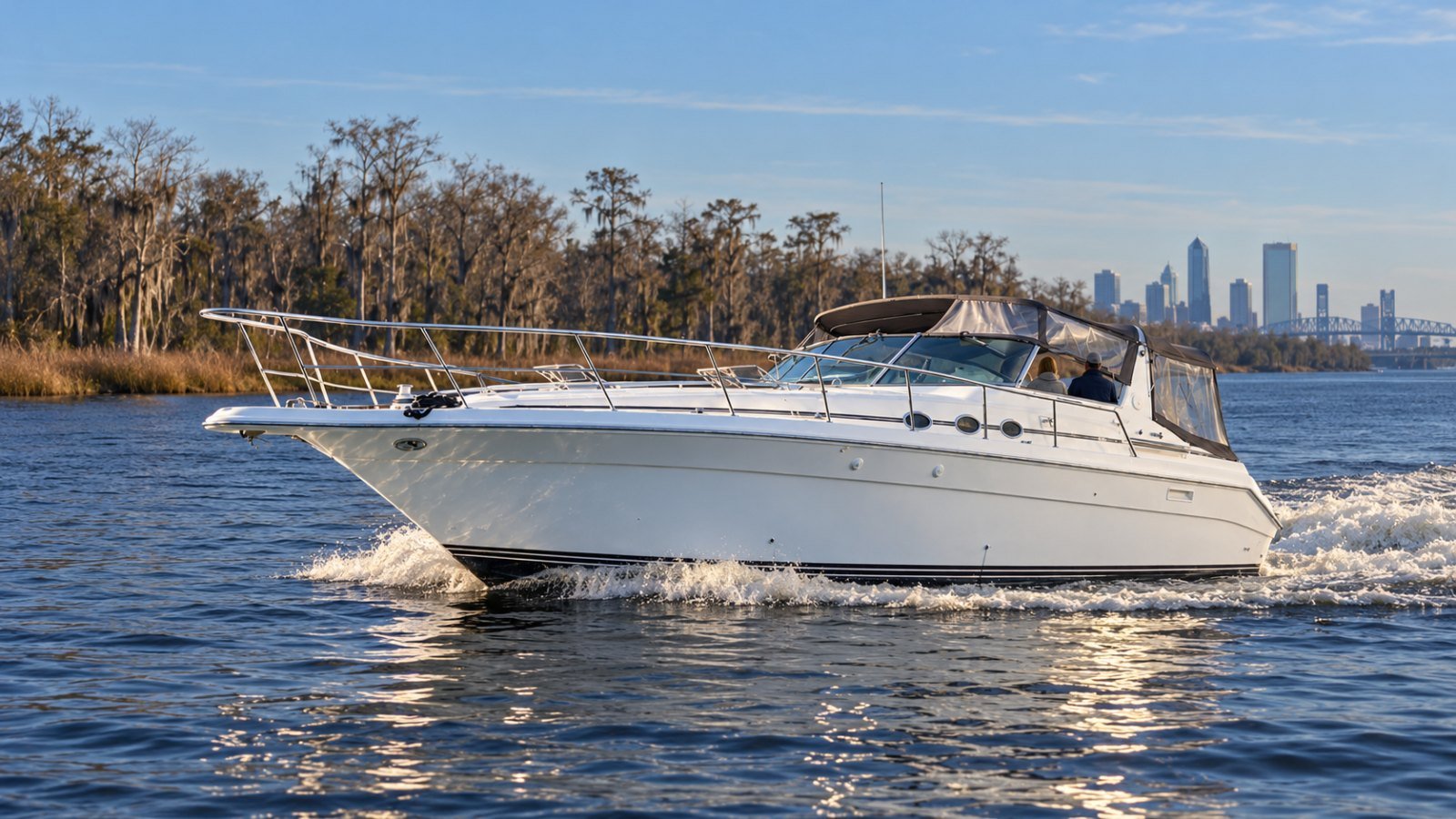
The 24-foot tiki hut party boat takes up to 10 guests for four hours. The 44-foot Sea Ray carries up to 12, although swimming is not permitted from that vessel. For anything larger, the 50-guest party boat is the only option, and it books furthest ahead of all.
Sailing from Fernandina Beach
Sailing depends on wind rather than heat, which flips the usual calendar. April, May, October and November deliver the most consistent breeze without summer’s storm risk. Since the 33-foot sailboat starts at $225 for two guests, it is also the most affordable way to get on the water.
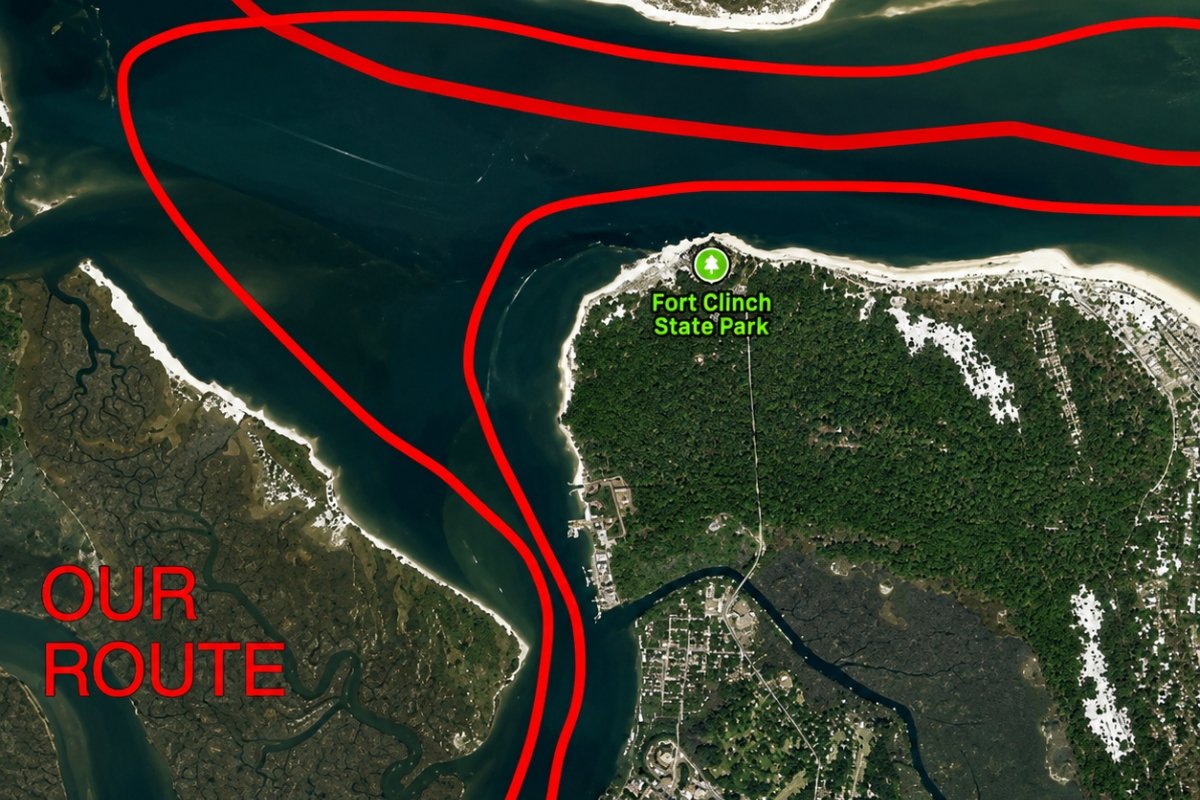
Choosing your Jacksonville boat charter departure point
Five launch points sound like a detail on a Jacksonville boat charter listing. In reality it is the single biggest lever on how a trip feels, especially in winter and mid-summer.
Peak season: May to October. Ocean access, sandbars and swimming. The widest choice of boats, including the party boats and the Sea Ray.
Works year-round. The St. Johns skyline works in any weather, so this is the winter and event-night pick.
Shines March to May and again in October. Sheltered sailing water, marsh views and Amelia Island scenery.
Sheltered in every month. Protected water that stays comfortable on breezy days when the ocean is choppy.
Our pick for families. Quiet river cruising, gentle water and easy wildlife spotting with small children aboard.
How far ahead should you book a Jacksonville boat charter?
Lead time on a Jacksonville boat charter matters more than most people expect, because each boat runs a limited number of slots per day. Use these rough guidelines.
- Summer weekends and holidays: three to six weeks ahead, and longer for groups above eight.
- Spring and fall weekends: two to three weeks ahead.
- Winter and any weekday: often available within a few days.
- Event dates such as the Fourth of July, the light boat parade and Jazz Festival weekend: two months or more.
Cancellation terms reward planning too. Cancel five or more days out and you can reschedule, whereas cancellations inside five days are non-refundable. Weather cancellations are handled separately, with a full refund or a reschedule at the captain’s discretion.
Jacksonville boat charter prices, boat by boat
Here is the full fleet with real starting prices, so you can match a Jacksonville boat charter to a season and a budget. Every price already includes your USCG-licensed captain.
| Boat | Departs from | Guests | Length | From |
|---|---|---|---|---|
| 33-ft Sailboat | Fernandina Beach | 1–2 | 2 hours | $225 |
| 33-ft Sailboat | Fernandina Beach | 3–6 | 2 hours | $275 |
| 37-ft Sailing Catamaran | Fernandina Beach | Up to 6 | 2 hours | $399 |
| 35-ft Catamaran | Jacksonville Beach | Up to 6 | 2 hours | $495 |
| 25-ft Powerboat | Jax Beach, Goodby’s or Julington Creek | Up to 6 | 3 hours | $767 |
| 44-ft Sea Ray Yacht | Jacksonville Beach | Up to 12 | 2 hours | $1,035 |
| 24-ft Tiki Hut Party Boat | Jacksonville Beach | Up to 10 | 4 hours | $1,343 |
| 25-ft Proline Fishing Charter | Jacksonville | Up to 6 | 4 hours | $1,600 |
| 30-ft Cruiser | Downtown Jacksonville | Up to 10 | 4 hours | $2,403 |
| Party Boat | Jacksonville Beach | Up to 50 | 4 hours | $5,600 |
| 48-ft Absolute Navetta | Fernandina Beach | Up to 10 | 3 hours | $18,240 |
For a fuller breakdown of what drives the number, read our guide to what it costs to rent a boat with a captain in Jacksonville, or browse the full fleet with live availability.
Weather, storms and what happens if your trip is canceled
Florida weather is dramatic but predictable in shape, so a Jacksonville boat charter rarely gets caught out. Summer storms arrive quickly, hit hard and clear within an hour, which is why morning departures are so reliable. Winter fronts, meanwhile, bring wind rather than rain, so the sheltered creeks come into their own.
The Atlantic hurricane season officially runs from June 1 to November 30, with peak activity from mid-August to mid-October. Tropical systems are tracked days ahead, so cancellations are never a surprise. If your captain calls a trip on safety grounds, you receive a full refund or a reschedule.
What to bring, season by season
Packing for a Jacksonville boat charter barely changes across the year, apart from one layer. Bring sunglasses, sunscreen, a hat and closed-toe non-marking shoes in every month. Add swimwear and a towel from May to October, and swap in a windproof jacket from November to March.
Food and drink are yours to bring, so pack a cooler with whatever you like. Children are welcome with properly sized life jackets. If anyone in your group is prone to motion sickness, take medication before boarding rather than after. The FAQ page covers meeting points, restrooms and photography packages in more detail.
Jacksonville boat charter FAQs
These are the questions our captains field most often about timing a trip.
October is the strongest all-round month. The ocean still averages about 78°F, summer crowds have gone, and the weather is settled. May is the best alternative if you want warm water before peak season pricing arrives.
Yes. Charters run year-round. Winter highs sit in the mid-60s and the river is often glassy, so December through February suits sightseeing, photography, dolphin watching and sheepshead fishing. Swimming is not practical, since the ocean drops to around 59°F.
No. Every Jacksonville boat charter includes a USCG-licensed captain at no extra cost, so no license or experience is required. Guests are welcome to help steer or handle the sails when conditions allow.
Mid-May through late October. Ocean temperatures at Jacksonville Beach average roughly 74°F in May, peak near 83°F in August, and hold around 78°F through October before cooling quickly in November.
Booking and weather questions
Allow three to six weeks for summer weekends and holidays, two to three weeks for spring and fall weekends, and a few days for winter or weekday trips. Large groups and event dates such as the Fourth of July need considerably longer.
If the captain cancels for weather or safety reasons, you receive a full refund or a reschedule. Guest cancellations made five or more days ahead can be rescheduled, while cancellations inside five days are non-refundable.
Bottlenose dolphins are resident and can be seen in any month. Manatees are most abundant from late April through August, transit the Intracoastal in September and October, and are rarely seen between December and February.
Ready to book your Jacksonville boat charter?
Check live availability across all five departure points, then book in three steps. Your USCG-licensed captain is always included.
See boats & availability Ask a captainSources and further reading
- NOAA National Hurricane Center – Atlantic season dates and climatology
- NOAA Fisheries – North Atlantic right whale calving season
- Florida Fish and Wildlife Conservation Commission – manatee seasons and slow-speed zones
- Visit Jacksonville – annual events calendar